
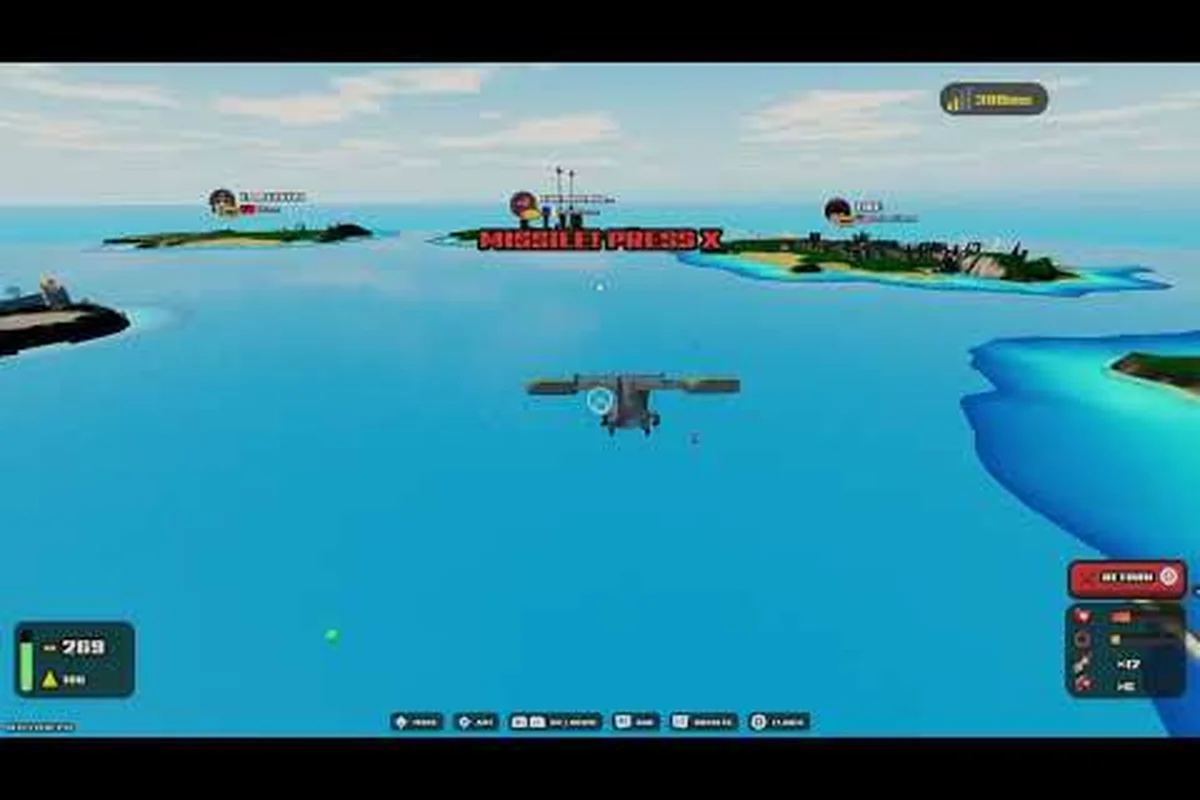
World of Nukes land expansion is the single decision that quietly decides whether your island snowballs or stalls, because every plot you buy either pays for itself through new income space or locks your cash into empty ground. The official Roblox page confirms the island begins as a modest tropical base with limited land, and that constraint is exactly why timing matters more than raw spending. Get the order right and your base grows itself; get it wrong and you spend the mid-game broke.
Why Land Expansion Timing Decides Your Island's Growth
Most players treat new plots as a reward they buy when they feel rich, then wonder why their income flatlines for twenty minutes afterward. The better mental model is that land is a capacity purchase, not a trophy. A plot only earns its keep when you already have a building ready to drop on it that returns cash faster than the plot cost.
According to the official World of Nukes page, players are expected to expand land gradually while keeping income structures close together to reduce travel time. That single sentence captures the whole tension: expansion gives you room, but spreading out costs you efficiency. The sweet spot is buying land one step ahead of your building queue, never two.
Here is the practical rule that experienced builders repeat in community discussions: buy the plot when you can afford the plot plus the first building on it. If a new plot costs 5,000 and your next income structure costs 3,000, you need 8,000 in hand before the purchase feels good. Buying at 5,000 leaves you with an empty lot and no way to use it.
That math changes as your income scales, which is why a fixed "buy land at level X" answer never works. What matters is the ratio between your passive income per minute and the cost of the next plot. When a plot costs less than roughly two minutes of your current income, it is almost always correct to buy immediately.
-
Early game: plots are cheap relative to income, so buy aggressively and keep the queue full.
-
Mid game: plot costs climb faster than income, so buy only when a building is ready.
-
Late game: land is rarely the bottleneck; layout efficiency and defenses matter more.
The rest of this guide breaks that curve into concrete milestones, shows what to build first on fresh ground, and explains how decorations fit without wrecking your cash flow. For a broader foundation on base structure, the island building guide covers the fundamentals that this expansion timing builds on.
Reading the Plot Cost Curve Against Your Income
The World of Nukes building system scales plot prices upward as your island grows, so the gap between "I can afford land" and "I can afford land plus a building" widens over time. Tracking that gap is the core skill of expansion planning.
| Island Stage | Typical Plot Cost Feel | Income Benchmark to Buy | What to Do With the Plot |
|---|---|---|---|
| Starting base | Very cheap | Any positive income | Drop a first income structure immediately |
| Early growth | Cheap | 1-2 minutes of income | Chain two plots back to back |
| Mid game | Noticeable | 2-4 minutes of income | Buy only with a building ready |
| Late game | Expensive | 4+ minutes of income | Buy for defense spacing, not income |
| Endgame | Marginal | Only with surplus cash | Fill gaps around the core |
The pattern in that table is deliberate: early plots are nearly free relative to what they generate, so hesitation costs you compounding income. By mid game, each plot is a real investment that needs a tenant. By late game, you are buying land for anti-air and shield spacing rather than for new income slots, which flips the logic entirely.
A useful habit is to check your income counter right before every purchase. If the plot price divided by your per-minute income is under two, buy. Between two and four, buy only if a building is queued. Above four, wait for a cash spike from a raid or a completed upgrade. This single ratio replaces every guesswork tier list you will find.
Community footage of rebuilds after updates shows another wrinkle: building sizes change between patches, so a plot that fit three structures last month may only fit two now. That is why leaving a small buffer of unused ground around your income cluster is not waste — it is insurance against a resize forcing a full rebuild.
What to Build First on Every New Plot
The question of what to build first on fresh land has a boring but correct answer: whatever returns cash fastest with the smallest footprint. World of Nukes build priority should always favor income density over visual variety, at least until your economy is self-sustaining.
| Priority | Building Type | Why It Goes First | When to Skip It |
|---|---|---|---|
| 1 | Fast-payback income structure | Funds the next plot | Never in early or mid game |
| 2 | Second income structure | Doubles the plot's output | If the plot is tiny |
| 3 | Storage or capacity upgrade | Prevents income caps | If caps are not an issue yet |
| 4 | Defensive structure | Protects the cluster | If raids are not threatening you |
| 5 | Decorations | Morale and layout clarity | Always last |
Notice that defenses sit at priority four rather than one. New players often armor a fresh plot before it earns anything, which is backwards: an undefended income building that runs for ten minutes beats a defended empty lot every time. Add defenses once the cluster is worth protecting, not before.
The payback window is the number to watch. If a building costs 3,000 and generates 300 per minute, it pays for itself in ten minutes. Anything under a fifteen-minute payback is a strong buy on a new plot; anything over thirty minutes should wait until your income baseline rises. This is the same logic that drives upgrade choices in the cash and rewards breakdown, where payback time beats raw output every time.
Grouping Income Structures Tightly
Travel time is a hidden tax. When income buildings sit far apart, you spend more of each collection run walking and less time reinvesting, and the official page explicitly recommends keeping income structures close together for this reason. On a new plot, place your first building adjacent to your existing cluster rather than at the far edge.
Leaving Room for the Core
Every island has a core worth defending, and expansion should radiate outward from it rather than scatter. Reserve a ring of ground around the core for anti-air and shields, then push income structures into the next ring out. This keeps your defensive coverage compact while your economy grows around it.
World of Nukes Build Priority Across the Whole Island
Zooming out from individual plots, your island-wide build priority follows the same payback logic but at a larger scale. The mistake to avoid is buying land faster than you can fill it, because empty plots generate nothing while still raising the price of the next plot.
| Phase | Land Strategy | Building Focus | Cash Reserve Target |
|---|---|---|---|
| First hour | Buy 2-3 plots | Pure income | Keep under 20% idle |
| Early mid game | Buy on demand | Income plus first defenses | 30% for next plot |
| Mid game | Buy with building ready | Income density, capacity | 40% buffer |
| Late game | Buy for spacing | Defenses, shields, anti-air | 50% buffer |
| Endgame | Fill gaps only | Optimization and decoration | Flexible |
The reserve targets matter because they prevent the classic failure state: spending every coin on land, then sitting with three empty plots and no income to fill them. Keeping a cash buffer means the moment a building unlocks or a raid pays out, you can convert that cash into productive ground instantly.
Players who want a fuller picture of how layout choices interact with expansion should look at the best layout strategies, which cover how to arrange structures once you have the land to work with. Expansion and layout are two halves of the same decision, and buying plots without a layout plan wastes both.
When to Stop Buying Land
There is a point where more land actively hurts you. Once your income structures are dense and your defenses cover the core, additional plots mostly add travel distance and maintenance without adding output. At that stage, redirect cash into upgrades that multiply existing buildings rather than into new ground.
A simple test: if you cannot name the building that will occupy a new plot within thirty seconds of buying it, you do not need that plot yet. Vague intentions like "I'll figure out the layout later" are exactly how players end up with scattered plots that break adjacency bonuses between reactors and their support structures. Before each purchase, picture the exact world of nukes building system entry — a reactor cluster, a storage yard, or a decoration buffer — and confirm it fits your existing grid. If the answer is "maybe a turret," skip the plot and spend the cash on an upgrade instead; a delayed purchase costs nothing, but a misplaced building forces a costly rebuild later.
Island Decorations Without Wrecking Your Economy
World of Nukes island decorations are the most misunderstood part of the building system, because they look like pure cosmetics but they occupy real ground that could hold income. The right approach is to treat decoration as a late-phase luxury funded by surplus, never by your expansion budget.
| Decoration Approach | Cost Impact | Best Timing | Risk |
|---|---|---|---|
| Zero decoration | None | First hour to mid game | Island looks plain |
| Functional decoration | Low | After income is stable | Minor ground waste |
| Themed clusters | Medium | Late game | Blocks future expansion |
| Full aesthetic build | High | Endgame only | Slows growth if rushed |
The trap is decorating early. A player who spends 10,000 on visual flair in the first hour has effectively delayed two plots and the buildings that would have filled them, and that delay compounds for the rest of the session. Decorations are a reward for a working economy, not a substitute for one.
That said, decoration is not worthless. A clearly organized island is easier to navigate, which reduces collection time, and a themed layout makes it obvious where your income cluster ends and your defensive ring begins. The compromise is functional decoration: paths and markers that clarify layout rather than pure ornament. Spend on those once your income baseline is comfortable, and save the elaborate builds for when land is no longer the constraint.
If you are still in your first session and unsure whether you have the economy to support decoration yet, the new player guide walks through the first-hour priorities that make later spending decisions much easier.
A Practical Island Setup Guide for Expansion
Pulling everything together, a solid World of Nukes island setup guide comes down to sequencing: income first, land second, defenses third, decoration last. Each step funds the next, and the order is what separates a fast-growing island from a stalled one.
-
Step 1: Build your first income structure on the starting land and let it run.
-
Step 2: Buy your first plot as soon as you can afford plot plus building, then fill it immediately.
-
Step 3: Repeat until plot costs exceed roughly two minutes of income.
-
Step 4: Add a defensive ring around the core once your cluster is worth protecting.
-
Step 5: Convert surplus cash into upgrades that multiply existing buildings.
-
Step 6: Add functional decoration and themed layouts only after income is stable.
-
Step 7: Stop buying land when you cannot name the next building for it.
Following that sequence means every plot you purchase has a purpose the moment you buy it, which is the entire point of expansion timing. The players who grow fastest are not the ones who buy the most land — they are the ones who never own an empty plot for more than a minute.
For the most current details on land expansion mechanics and related in-game data, refer to the official World of Nukes Roblox page.
Frequently Asked Questions
How much should I save before buying a new land plot?
Save enough to cover the plot plus the first building you plan to place on it. If the plot costs 5,000 and your next income structure costs 3,000, wait until you have 8,000. Buying land you cannot fill leaves you with an empty lot and stalled income.
What should I build first on a fresh plot?
Prioritize a fast-payback income structure with a small footprint, and aim for anything that returns its cost in under fifteen minutes. In practice, that means favoring cheap, high-frequency generators over expensive single-payout buildings: a structure costing 3,000 that nets 250 per minute pays for itself in twelve minutes, while a 10,000 building earning 400 per minute needs twenty-five. Defenses and island decorations come later, once the plot is generating cash and your cluster is worth protecting from raids.
Do island decorations hurt my progress?
Only if you buy them early. Decorations occupy ground that could hold income, so spending on them before your economy is stable delays plots and buildings. Once income is comfortable, functional decoration that clarifies layout is a reasonable investment. Treat island decorations as a late-game cash sink rather than a build-priority item: a decoration placed on a plot that could instead host a 3,000-cost generator netting 250 per minute costs you roughly 250 per minute of forgone income until that plot is filled. In practice, defer decorations until every plot in your cluster carries a payback-positive structure, then spend surplus on decorations that visually separate your income core from your defense ring so you can spot raid gaps at a glance.
When should I stop expanding my island?
Stop when you cannot name the building that will occupy the next plot within thirty seconds. At that point, extra land adds travel distance and maintenance without adding output, so redirect cash into upgrades that multiply your existing structures instead.
Does expansion get more expensive as my island grows?
Yes. Plot prices scale upward with island size, so the gap between affording land and affording land plus a building widens over time. Track the ratio of plot cost to your per-minute income and buy only when it stays under roughly four.