
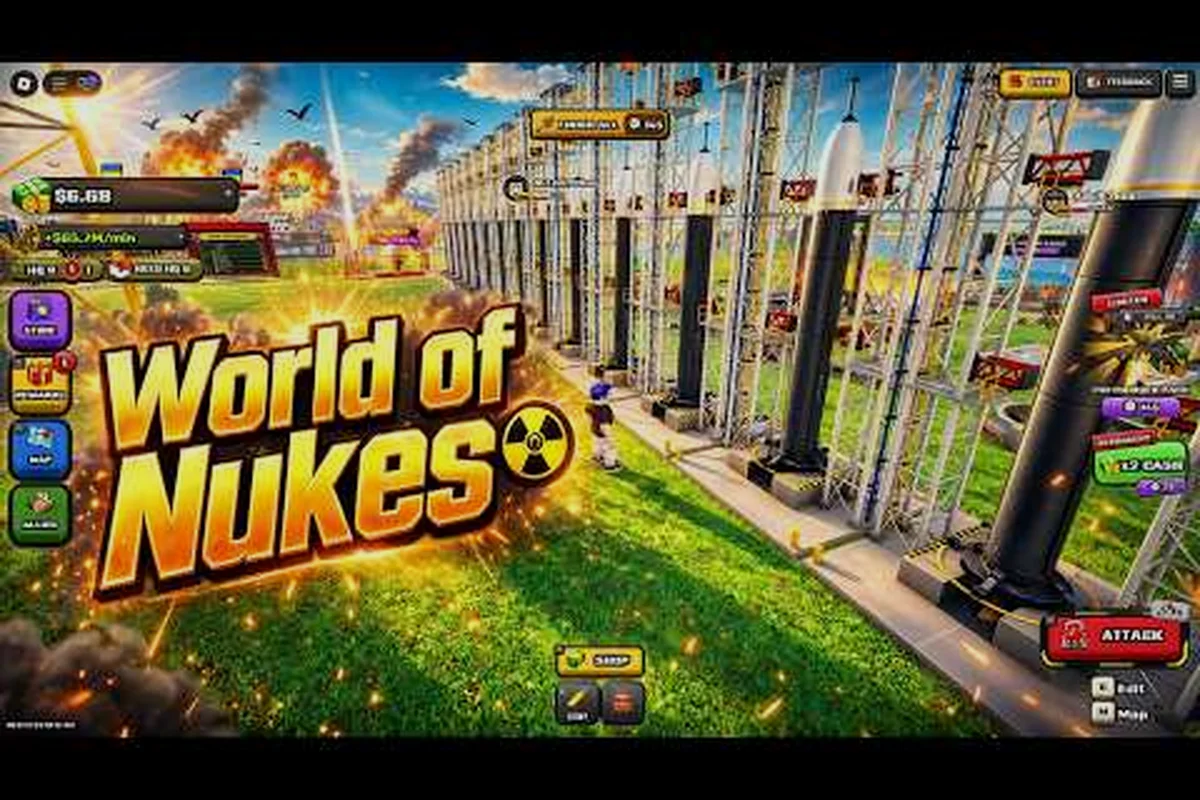
Most islands in World of Nukes don't fail because of enemy missiles — they stall because of a handful of repeatable World of Nukes common mistakes that drain cash before your economy ever gets going. This breakdown names each mistake, explains why it hurts, and gives you the exact fix so your camp turns into a superpower instead of a frozen sandbar.
The game is a Roblox island-nation tycoon from the Build. Defend. Nuke. group, and according to the official World of Nukes page, progression runs from a tiny camp to a full military power with missiles, jets, warships, anti-air, and shields. That arc only works if your early cash flow is healthy, which is exactly where beginners trip.
Why Early Economy Mistakes Sink Your Whole Run
The single biggest reason islands stall is that players treat early cash like spending money instead of seed money. Income buildings come first because they fund every later expansion, and skipping them creates a slow-motion collapse that's hard to notice until you're stuck.
Community gameplay footage from a Newbie to Roblox progression run shows the first missile launch happening around the ten-minute mark, but only for players who already have income ticking. If you rush offense before that foundation, you'll be waiting far longer for the same milestone.
The failure chain is predictable: with no income buildings, your cash bar crawls toward the first turret while the ten-minute missile window closes, so you over-expand plots to compensate, hit negative cash pressure, and then can't afford defense layering when raiders hit your open shoreline. Each skipped income building doesn't just cost you its own payout — it delays every upgrade behind it, which is why the table below shows a 10-20 minute deficit from a single early purchase order mistake.
| Mistake | What It Looks Like | Immediate Symptom | Long-Term Cost |
|---|---|---|---|
| Skipping income buildings | Buying turrets first | Cash bar barely moves | 10-20 min behind curve |
| Over-expanding the island | Spamming plots with no income | Negative cash pressure | Stalled upgrades |
| Ignoring the free rewards | Not liking or joining the group | Missing starter boost | Slower first hour |
| Buying offense too early | Missiles before economy | No payback | Can't sustain attacks |
| No defense layering | Open shoreline | Raided constantly | Lost rebuild cash |
Each row above is a World of Nukes beginner mistake that compounds rather than resolves on its own, and the order you fix them matters. Start with the income-building deficit, since a single skipped payout structure is the 10-20 minute curve gap shown in the table; that recovered cash flow then funds the defense layering you need to stop shoreline raids, which in turn protects the rebuild cash that over-expansion and early missile purchases drain. In practice, players who fix economy first typically reach their first missile launch near the ten-minute mark instead of grinding toward it, because a healthy economy buys you the time to correct everything else.
If you want the ordered version of what to build first, the beginner guide walks through the opening sequence step by step, which pairs well with the mistake list below. Read it as the corrective counterpart to this table: the guide tells you the build order (income buildings before turrets, defense layering before missiles), while each row above tells you what happens when you invert that order. Work through both side by side, and you'll spot your own run's failure point — whether it's the skipped payout structure costing you that 10-20 minute curve gap or the open shoreline draining rebuild cash — before it compounds into a stalled island.
Mistake One: Treating Income Buildings as Optional
New players often see income buildings as boring and buy a turret or a missile pad instead, because those feel like progress. They aren't — they're a one-time cost with no return, while income buildings pay you back every single minute you're on the island.
The fix is simple: build income before anything that shoots. Your first few purchases should all be structures that generate cash, and only after your income is stable should you look at defense or offense. This is the core lesson in any World of Nukes complete guide, and it's the one most players learn the hard way.
How Much Income Is Enough?
A useful rule of thumb reported by players is that you want your income to comfortably cover your next upgrade before you commit to it. If buying a new structure would leave your cash bar near zero, you're not ready.
| Phase | Income Priority | Offense Priority | Defense Priority |
|---|---|---|---|
| First 5 minutes | Very high | None | Minimal |
| 5-15 minutes | High | Low | Low |
| 15-30 minutes | Medium | Medium | Medium |
| 30+ minutes | Maintain | High | High |
Notice that offense never leads. It pays for itself later, once your economy can absorb the cost of missiles and jets without stalling your building queue. A common beginner mistake is rushing a Missile Silo or Bomber before income stabilizes, then watching the upgrade chain collapse because every launch drains the same cash pool that funds your next Factory or Research Lab. Treat early offense as a delayed investment: the 15-30 minute row in the table above is where offense finally reaches Medium priority, not minute five, so hold your strike units until your income covers both their build cost and the replacement cost of losses.
Mistake Two: Expanding the Island Faster Than You Can Fund It
Island expansion feels like the whole point of the game, and it is — eventually. The mistake is expanding before your income can support the new plots, which leaves you with a big empty island and no cash to fill it.
Every new plot you unlock is a promise to build on it. If you can't afford the building that goes there, you've just spent money to create a liability. Expand only when your income covers the next build, not when you have a little spare cash burning a hole in your pocket.
The Expansion Checklist
Before you buy a new plot, run through this quick check: expansion is the single most common place where world of nukes runs stall out, because a new plot silently raises your upkeep and stretches your shoreline before your economy has caught up. Treat it as a gate, not a reward — confirm your income bar refills faster than you can spend it, you hold enough cash to drop at least one income building on the new land the moment it's claimed, your existing plots are fully built out rather than sitting empty, and your defense can actually cover the extra shoreline you're about to expose. Skip any one of those and you've bought a liability: an empty plot still drains upkeep, and a longer coast is a longer border for raiders to probe.
-
Your income bar refills faster than you can spend it
-
You have enough cash on hand to place at least one income building immediately
-
Your existing plots are already built out, not sitting empty
-
Your defense can cover the new shoreline you're exposing
If any of those fail, wait. The island isn't going anywhere, and a compact, productive island beats a sprawling, broke one every time. The new player checklist has a fuller version of this gating logic if you want a printable order of operations.
Mistake Three: Ignoring the Free Rewards Sitting in Front of You
This one costs players nothing but a click, yet it's one of the most common World of Nukes beginner mistakes. The official description states that liking the game and joining the developer group grants free rewards — and the group, Build. Defend. Nuke., had roughly 51,279 members and community Tier 3 as of October 31, 2026.
Skipping that is pure lost value. Those rewards give you a head start on the exact economy you're trying to build, which means fewer minutes stuck waiting on a slow cash bar. Concretely, the like bonus and the group bonus stack, so a player who does both before placing a single turret begins with extra resources already banked — resources that would otherwise come from grinding early waves. In a game where the opening minutes decide whether your first defense holds, that buffer is the difference between a stable base and a rushed rebuild. It costs one click each, so there's no reason to leave either reward unclaimed.
| Free Action | Where | What You Get | Why It Matters |
|---|---|---|---|
| Like the game | Game page | Reward per official description | Free early boost |
| Join the group | Build. Defend. Nuke. group | Reward per official description | Stacks with the like bonus |
| Check the group page | Group page | Community tier info | Stay current on updates |
The whole claim takes under a minute — one click on the game page's Like button, one click on Join Group for Build. Defend. Nuke. — and it's the cheapest fix on this entire list, costing zero Robux and zero playtime compared to the turret upgrades you'd otherwise grind for. Do it before your first build, not after: the like and group bonuses stack into your opening bankroll, so you're placing defenses with resources already in hand instead of waiting out a slow cash bar during the waves where a rushed rebuild usually happens.
Mistake Four: Building Offense With No Payback Plan
Missiles, jets, and warships are the flashiest part of World of Nukes, and the game's official page lists the Doomsday Device and wonders as late-game milestones for a reason — they're late-game. Buying offense early feels powerful but leaves you with nothing to show for the spend.
The fix is to ask one question before any offensive purchase: what does this earn me back? If the answer is "nothing yet," it's too early. Offense should come after your economy can regenerate the cost within a reasonable window, so a failed attack doesn't set you back ten minutes.
Sequencing Offense Correctly
Think of offense as a reward for a healthy economy rather than a shortcut to one: every missile, bomber, and warhead you build drains the same cash pool that funds your mines and research, so buying offense before your income can absorb the hit stalls the very production that sustains it. A common world of nukes beginner mistake is rushing an early missile silo or bomber while income and anti-air lag behind, leaving you with a slow rebuild after each purchase and a wide-open target for retaliation. Treat offense as the payoff for a stable economy, not a replacement for it.
-
Get income stable first
-
Layer basic anti-air and shields so you're not a free target
-
Add offense once your cash bar recovers quickly after a big purchase
-
Push toward late-game milestones like the Doomsday Device only when the economy can carry the cost
That order keeps you dangerous without going broke, and it's the backbone of any World of Nukes full guide worth reading. The reason sequencing beats raw spending is that a missile silo built on a thin economy sits idle waiting for cash, while the same silo funded by stable income plus layered anti-air and shields keeps firing through a retaliation strike. Watch your cash bar after each big purchase: if it refills in seconds you can safely add the next offensive tier, but if it crawls you've hit the classic world of nukes common mistake of over-investing in offense before your economy carries it. Only chase late-game milestones like the Doomsday Device once income absorbs the cost without stalling mines or research — that discipline separates a complete guide run from a beginner collapse.
Mistake Five: Leaving Your Shoreline Undefended
A stalled island is often a raided island. Players pour everything into economy and offense, then lose it all because the shoreline is wide open and there's no anti-air or shielding to speak of. Rebuilding after a raid costs the same cash you were saving for upgrades.
Defense is cheaper than rebuilding. A modest layer of anti-air and shields protects the income you worked for, and it lets you expand without constantly looking over your shoulder. The official page lists anti-air and shields as core systems alongside missiles and warships, which tells you the game expects you to use them together.
| Defense Layer | Protects Against | When to Build | Cost Feel |
|---|---|---|---|
| Anti-air | Air attacks | Once income is stable | Moderate |
| Shields | Incoming strikes | Before first expansion | Moderate |
| Shoreline coverage | Raids | As soon as you expand | Scales with island |
Build defense in the same breath as expansion, not after it. Treat anti-air, shields, and shoreline coverage as a single package you fund from your first income spike — dropping shields before your first expansion and adding anti-air once income stabilizes means a raider hits a wall instead of open sand. The starting guide covers how to layer these cheaply in the first session, so you never have to choose between growing and guarding.
Mistake Six: Playing Without a Build Order
The final and most invisible mistake is playing reactively — buying whatever looks good in the moment with no plan. Reactive play is how all the other mistakes sneak in, because you never stop to ask whether a purchase fits your current phase.
A build order fixes this. It doesn't need to be rigid, but it should tell you what your next three purchases are before you make them. When you have a plan, you stop buying turrets when you need income and stop expanding when you need defense.
A Simple Build Order to Follow
-
Phase 1: income buildings only
-
Phase 2: first defense layer plus continued income
-
Phase 3: controlled expansion with defense coverage
-
Phase 4: offense and late-game milestones
This is the skeleton of a World of Nukes everything you need to know approach, and it's flexible enough to adapt to how a given server is playing. Once you're past the early game, the late game guide picks up where this leaves off with progression and scaling advice.
Frequently Asked Questions
What is the most damaging World of Nukes common mistake?
Skipping income buildings is the worst one because it starves every later decision. Without steady cash flow you can't expand, defend, or build offense, so the whole island stalls. Fix income first and the other mistakes become far easier to avoid.
How do I know if I'm expanding too fast?
If your new plots sit empty or your cash bar stays near zero after buying a plot, you expanded too fast. Wait until your income comfortably covers the next building before unlocking more land, and build out existing plots first.
Are the free group rewards actually worth claiming?
Yes. According to the official description, liking the game and joining the Build. Defend. Nuke. group both grant free rewards. It takes under a minute and gives you a head start on the economy you're trying to build, so claim them before your first purchase.
When should I start building missiles and jets?
Only once your income buildings are running and your cash bar refills fast enough to absorb a big purchase without stalling. Before that, drop a few basic anti-air and shields so a single raid can't erase the economy you just built. Missiles and jets are a late-game milestone, not an opening move — buying them first usually leaves you broke, undefended, and unable to recover, which is exactly the snowball-in-reverse trap behind most World of Nukes common mistakes.
Does defense really matter if I'm not being attacked yet?
It matters because defense is cheaper than rebuilding. An open shoreline invites raids that wipe out the income you worked for, so layer anti-air and shields as you expand rather than waiting for the first attack to teach you the lesson.
The pattern behind every World of Nukes common mistake is the same: spending on the exciting thing before the boring thing that funds it. Build income first, expand only when you can afford to fill the land, claim the free rewards, layer defense as you grow, and keep offense for when your economy can carry it. Follow that order and your island stops stalling and starts snowballing toward the late-game milestones the game is built around.