
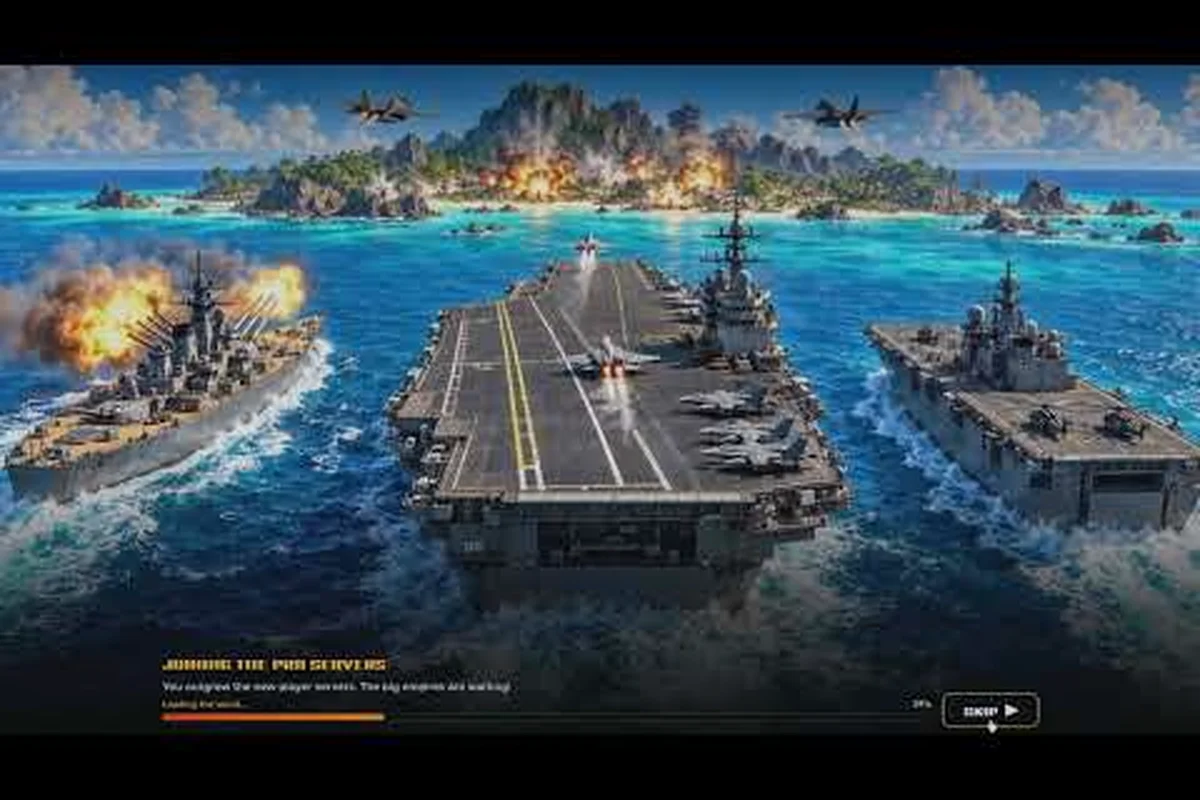
A working World of Nukes defensive strategy decides whether your island becomes a superpower or a smoking crater, because every rival in the lobby is building toward the same launch button. This guide breaks down the defense mechanics that actually stop incoming nukes.
The core loop is simple to say and hard to master: Build. Defend. Nuke. Most players nail the first and third steps while neglecting the middle one, then wonder why their progress resets overnight. According to the official World of Nukes game page, defense rests on two pillars — anti-air that intercepts incoming missiles and aircraft, and shields that protect the island from enemy nukes. Understanding how those two systems interact is the difference between a base that survives a war and one that feeds somebody else's kill count.
The World of Nukes Defense Loop, Step by Step
The defense mechanics in World of Nukes are layered rather than binary, which is why stacking one system and ignoring the other rarely works. Anti-air handles anything that flies toward you — missiles, bombers, and similar airborne threats — while shields absorb the nuclear payloads that slip through. A superpower that grows through attacks needs both layers running at once, because each covers a gap the other leaves open.
Think of it as two filters. The anti-air system is your outer screen, and it wants to thin out incoming ordnance before it ever reaches your airspace. The shields are your inner wall, and they exist specifically for the moment interception fails. Community strategy notes consistently recommend balancing the two so your island keeps expanding instead of rebuilding.
| Defense Layer | What It Stops | Primary Weakness | Priority |
|---|---|---|---|
| Anti-air system | Incoming missiles and aircraft | Saturation attacks that overwhelm interceptors | High — build first |
| Shields | Enemy nukes hitting the island | Sustained bombardment that drains protection | High — build alongside |
| Balanced mix | Both, in sequence | Requires steady resource investment | Highest — long-term goal |
| Single-layer stacking | Only one threat type | The other threat type walks right through | Avoid |
The practical takeaway is that a layered defense beats a specialized one almost every time. A player with heavy anti-air and no shields will watch a single leaked nuke undo an hour of building, while a shield-only player gets chipped down by conventional strikes that never trigger the shield at all.
Why the Build. Defend. Nuke. Loop Matters
The developer group behind the game, the Build. Defend. Nuke. Roblox group, names the loop directly in its identity, and that phrasing is a hint about intended pacing. Defense is not a phase you complete and forget — it is a continuous tax on your economy that pays out in survival. Players who treat defense as a one-time purchase tend to peak early and then bleed territory to rivals who kept upgrading.
Reading an Incoming Attack Before It Lands
Warning signs usually appear before the warhead does. Watch for rival players suddenly expanding toward your borders, aircraft loitering near your airspace, and any shift in the lobby's aggression pattern. When you spot those cues, the correct response is to verify your anti-air is online and your shields are charged rather than to panic-build. A calm read of the situation buys you the seconds that matter.
Building a World of Nukes Anti Air System That Holds
Your anti-air system is the first thing an attacker tests, so it needs to be online early and upgraded often. The goal is not a perfect wall but a screen thick enough that opponents decide you are not worth the missile. Interception that stops even half of an incoming wave changes the attacker's math considerably.
Priorities for a functional anti-air setup start with deciding how much of your economy you are willing to convert into interception, because every interceptor you build is a unit you did not spend on offense or expansion. In World of Nukes, anti-air is a defensive strategy investment rather than a one-time purchase: a single interceptor covers a narrow cone, so the practical benchmark is enough overlapping coverage to engage a missile wave from two angles at once. Treat your screen as a probability filter — if one interceptor stops roughly half of what enters its range, two layered interceptors push the leak rate down toward a quarter, which is the difference between losing a city block and losing a match.
-
Coverage over concentration — spread interceptors so a single lucky hit cannot blind your whole screen.
-
Upgrade before expanding — a stronger interceptor beats a second weak one in most engagements.
-
Keep it repaired — damaged anti-air is effectively offline anti-air, and rivals notice.
-
Pair it with shields — interception is a probability game, so assume something gets through eventually.
-
Watch the airspace — aircraft probing your perimeter are telling you where the real strike will come from.
The World of Nukes anti-air guide walks through the finer upgrade order if you want to squeeze more interception out of the same resource budget. For most players, the biggest gain comes from simply keeping the system maintained rather than chasing exotic setups.
| Anti-Air Investment Level | Interception Feel | Recommended For |
|---|---|---|
| Minimal, one or two units | Leaky, stops only single missiles | Early game only |
| Moderate, spread coverage | Reliable against casual attacks | Mid game standard |
| Heavy, upgraded and layered | Discourages most attackers outright | Late game superpower |
| Neglected but present | Unreliable, fails under pressure | Fix immediately |
The Saturation Problem
No anti-air screen is impenetrable. When an attacker fires more ordnance than your interceptors can process, some of it lands, and that is exactly why the shield layer exists. Recognizing a saturation attempt — a sudden spike in incoming projectiles rather than a single precise strike — tells you to rely on shields and absorb rather than chase every intercept.
World of Nukes Shields: Your Last Line of Defense
Shields are the reason a nuke does not automatically mean a lost island. They absorb the hit so your infrastructure survives, and their value scales with how much you have invested in them before the war starts. Building shields mid-attack is a losing race, so the correct time to strengthen them is always the quiet stretch between conflicts.
How to get the most from your shield layer: treat every shield tier as a distinct defensive asset rather than a single toggle. Basic shields absorb one direct nuke but take heavy drain, so a single layer is a stopgap, not a wall — pair it with the anti air system and dispersed structures so a breach never exposes your core. Upgraded shields absorb comfortably, which is why players who unlock them early and keep them topped off between wars report far fewer catastrophic island losses than offense-first builds. The key is timing: recharge depleted shields between bombardment waves, because protection that fails mid-attack cannot be rebuilt fast enough to matter.
-
Treat shields as insurance, not decoration — they only matter when something actually reaches you.
-
Upgrade during peace — the cost is the same, but the timing is far safer.
-
Accept the drain — sustained bombardment wears protection down, so plan for reloading.
-
Do not skip them because anti-air works — the one nuke that gets through is the one that hurts.
-
Combine with dispersal — spreading critical structures means a single breach is survivable.
The shield and defense breakdown covers upgrade paths in more depth, including which investments return the most protection per resource. Players who unlock shields early and keep them current report far fewer catastrophic losses than those who chase offense first.
| Shield State | Outcome Against a Direct Nuke | Action Needed |
|---|---|---|
| No shields | Full damage to the island | Unlock immediately |
| Basic shields | Absorbs the hit, heavy drain | Upgrade steadily |
| Upgraded shields | Comfortable absorption | Maintain and top off |
| Depleted shields | Protection fails mid-attack | Recharge between waves |
When to Let a Nuke Land
Sometimes absorbing a hit is the correct play. If intercepting would strip your anti-air right before a larger wave, letting the shield eat the first nuke preserves your screen for the real threat. That kind of sequencing judgment separates a solid World of Nukes survival guide from a list of buildings — the mechanics are simple, but the timing is where skill lives.
A Practical World of Nukes Survival Guide for Real Lobbies
Surviving in an active lobby is a rhythm, not a checklist. The players who last longest tend to follow a repeating cycle of build, harden, and observe rather than sprinting toward the biggest weapon available. Defense is cheap when you build it early and brutally expensive when you build it in a panic.
A workable defensive rhythm looks like this: treat your first minutes as a build-order problem where anti-air towers go up before your second expansion, since a single early air raid can erase a growth lead you spent ten minutes compounding. From there, cycle in fixed intervals — build, harden, observe — so shields come online the moment they unlock and every skirmish ends with repairs and recharge rather than a fresh offensive push. The players who climb the lobby rankings are rarely the ones with the biggest stockpile; they are the ones whose defense budget never drops to zero, because a hardened layer you already paid for is cheaper than the panic rebuild after a nuke lands.
-
Open with economy, but reserve a defense budget — do not spend everything on growth.
-
Get anti-air online before your first real conflict — even a modest screen changes outcomes.
-
Unlock shields as soon as they are available — they are the answer to everything anti-air misses.
-
Harden after every fight — repair, recharge, and upgrade before the next one starts.
-
Scout the lobby mood — a quiet lobby is a building lobby, and a loud one is a defending lobby.
The base defense fundamentals expand on this rhythm with unlock timings and protection priorities, which is worth reading once you have the basics running. The short version: every resource you sink into defense is a resource your rival cannot take from you.
| Phase | Defense Focus | Common Mistake |
|---|---|---|
| Early game | Get anti-air online | Spending everything on growth |
| Mid game | Unlock and upgrade shields | Assuming anti-air is enough |
| Pre-war | Repair and recharge everything | Entering a fight at half strength |
| Post-war | Rebuild the weakest layer first | Rebuilding offense instead |
| Late game | Balanced, upgraded layers | Over-investing in one system |
Coordinating Defense With Offense
Defense and offense share a budget, and the temptation is always to starve the former for the latter. A useful rule is to treat defense as a fixed percentage of every expansion rather than a separate project. If you are building a navy or an air wing, the warship command guide is a natural companion read, because projection of force and protection of home territory are two halves of the same strategy.
Common Defensive Mistakes That Sink Islands
Most defensive failures are predictable, which means most of them are avoidable. The pattern repeats across lobbies: players build one layer, feel safe, and then lose everything to the threat they ignored. According to community reports, the single most common cause of a lost island is a shield gap during a saturation attack.
The mistakes worth eliminating first share one root cause: reactive defense. Waiting until a nuke is already airborne to build your first anti-air system means interception rates start at zero exactly when saturation begins, and a single shield gap at that moment is fatal. A concrete example: a player who skips the anti-air upgrade because their raw unit count looks healthy is trusting numbers over coverage — but interception percentage, not unit quantity, determines how many warheads actually get through. The fix is cheap during a quiet stretch: audit every shield segment for gaps, upgrade anti-air before the next attack window, and spread structures so one breach never cascades into a full-island loss.
-
Building defense only after being attacked — you are already behind by then.
-
Ignoring maintenance — damaged systems are worse than no systems because they create false confidence.
-
Over-concentrating structures — one breach should never cost you the whole island.
-
Skipping the anti-air upgrade — interception rates matter more than raw unit count.
-
Treating shields as optional — they are the layer that converts a disaster into a setback.
The timing gap is where the real cost hides. Auditing every shield segment for gaps and upgrading anti-air costs only a handful of resources during a quiet stretch, when you have spare income and no incoming warheads to intercept. Attempt the same work mid-saturation and you are rebuilding under fire: each shield segment you re-verify is one you cannot defend, and every anti-air upgrade completes too late to raise interception percentage before the next wave lands. That is why the expensive version usually costs you the island — the fix itself is identical, but the window to apply it has already closed.
Frequently Asked Questions
What is the most important part of a World of Nukes defensive strategy?
Balance matters more than any single system. Anti-air intercepts incoming missiles and aircraft, while shields absorb the nukes that get through, so a layered setup survives far more attacks than stacking one layer. Community strategy notes consistently recommend running both so your island keeps growing through conflicts.
How do I avoid nukes when my anti-air keeps getting overwhelmed?
Saturation attacks are designed to beat interception, so the answer is the shield layer. Keep shields upgraded and charged before a war starts, and accept that some hits will land. Absorbing a nuke with a strong shield is a survivable outcome; absorbing one with no shield is usually not.
Are shields or anti-air better to build first in World of Nukes?
Anti-air comes first because it stops threats before they reach your island, and it is usually cheaper to bring online early. Shields should follow as soon as they are available, since they cover the interception gaps that no anti-air screen can fully close. Building both in sequence beats specializing.
How often should I upgrade my defense mechanics?
Upgrade during quiet stretches rather than during wars. Repair and recharge after every engagement, and push the next upgrade before the lobby turns aggressive again. Defense built in a panic costs more and arrives too late, while defense built in peace is the cheapest insurance in the game.
Can a single nuke destroy my whole island?
Only if your shield layer is missing or depleted. With working shields, a direct hit becomes a costly but recoverable event rather than a reset. That is why dispersing critical structures and keeping shields topped off are the two habits that most reliably keep a superpower alive through a long war.
Defense in World of Nukes is ultimately a habit rather than a build order. Keep anti-air online, keep shields charged, read the lobby before it turns, and treat every quiet moment as the right time to harden what you already have. Do that consistently and incoming nukes become an inconvenience instead of an ending.