
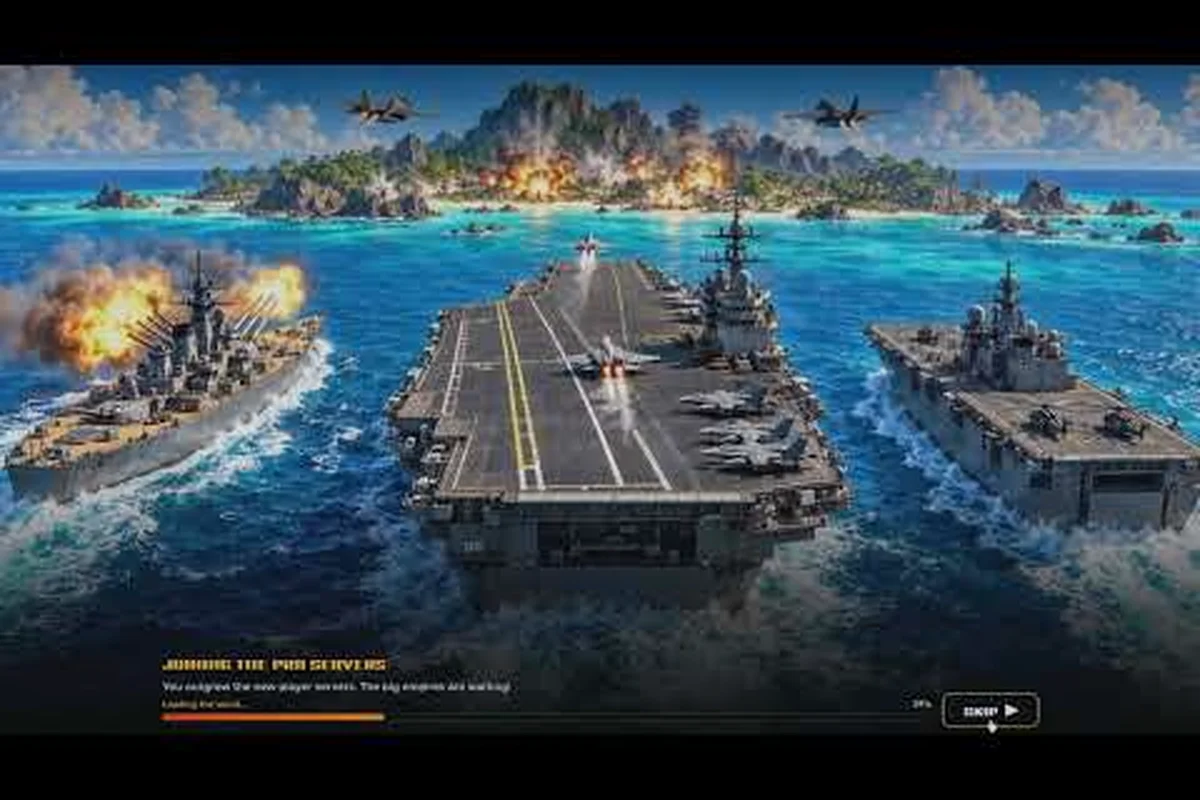
Every superpower in World of Nukes eventually faces the same question: do you spend your early cash on anti-air or shields? These World of Nukes defense tips answer that directly, because the wrong first purchase can cost you an entire island before your economy ever gets rolling. The short version is that anti-air handles missiles and aircraft, while shields absorb enemy nukes, and your build order should follow whichever threat is actually hitting you right now.
How the Defense System Is Structured
The World of Nukes defense system splits cleanly into two layers, and understanding that split is the foundation for every other decision you make. According to the official World of Nukes game page, defense comes from anti-air, which intercepts incoming missiles and aircraft, and shields, which protect the island from enemy nukes. Those are two different jobs, and no single building covers both.
That distinction matters because players often assume "defense" is one stat they can max out. It isn't. A shield that eats a nuke does nothing against a bombing run, and an anti-air battery that shreds jets will watch helplessly as a warhead drops on your command center. You need both eventually — the real skill is sequencing them.
Here's how the two systems compare at a glance, and the table below is worth memorizing before you spend a single resource on World of Nukes defensive buildings. Anti-air defense is your early-game workhorse: it's cheaper to field, it shuts down bombing runs and conventional missile volleys, and it keeps raiders from farming your island while you're still building up. Shields, by contrast, are a mid-game investment that only pay off once enemy nukes enter the picture — they absorb warhead impacts but sit idle against aircraft. That's why the standard progression runs anti-air first, shields second, and a mixed layout last, since spreading both too early leaves each layer too thin to stop anything.
| System | Stops | Fails Against | Typical Priority |
|---|---|---|---|
| Anti-air defense | Missiles, aircraft, bombing runs | Direct nuke strikes | Early game, active war |
| Shields | Enemy nukes, warhead impacts | Aircraft, conventional missiles | Mid game, deterrence |
| Mixed layout | Most threats | Sustained multi-wave attacks | Late game |
The community consensus, echoed in player strategy notes, is that balancing the two keeps a superpower growing through attacks rather than stalling after one bad raid. The failure mode is predictable: pour everything into shields and a lone bombing run flattens your anti-air before the warheads even launch, while over-investing in anti-air leaves your command center exposed to the first nuke that slips past interception. Treat that as your north star: neither system wins alone, and the sequencing you commit to early decides whether your island survives its first serious raid.
Why Anti-Air Defense Comes Online First
Anti-air is usually the cheaper, faster entry point into the World of Nukes defense system. It answers the most common early threat — a neighbor lobbing missiles or flying a sortie at your base — and it starts paying for itself the moment someone tests you. If you're still learning the ropes, the defense guide for new superpowers walks through the earliest unlocks in order.
The practical takeaway is simple: build anti-air before you feel safe, not after you lose a building. Players who wait for the first attack usually spend the next hour rebuilding instead of expanding. A single missile that connects on a barracks or resource depot can set back your build queue by several minutes of lost production, and that gap compounds each time a neighbor tests your perimeter. Treat your first anti-air emplacement as part of the opening build order alongside power and housing, not as a reaction to a raid report — the players who climb fastest in World of Nukes are the ones whose air coverage is already online when the first sortie arrives.
Anti-Air or Shields: Choosing Your First Defensive Building
This is the decision that defines your opening, and the honest answer is "it depends on your server." The World of Nukes anti air or shields question has no universal winner because the threat mix around your island changes from lobby to lobby. What you can do is read the situation and commit.
Use this decision table before you spend a single resource: match the build to the threat you're actually facing rather than the one you fear most. If hostile players near your island are already launching missiles and fielding jets, anti-air defense earns its cost immediately by intercepting both. If you've already eaten one nuke, shields directly counter the weapon that hurt you and deter a repeat strike. On a quiet server with no aggression yet, anti-air is the cheaper, faster placement that still covers more threat types, and if you're the biggest target on the map, shields signal that nuking you isn't worth the effort.
| Your Situation | Build First | Why |
|---|---|---|
| Neighbors spamming missiles and jets | Anti-air defense | Intercepts the attacks you're actually taking |
| Someone already nuked you once | Shields | Stops the exact weapon that hurt you |
| Quiet server, no aggression yet | Anti-air | Cheaper, faster to place, covers more threats |
| You're the biggest target on the map | Shields | Deters nuke users from picking on you |
| Tight budget, one purchase only | Anti-air | Broader coverage per resource spent |
The logic behind the last row is worth spelling out. Anti-air covers two threat categories — missiles and aircraft — while shields cover one. When you can only afford a single defensive building, buying the option that answers more attacks is the safer bet. You can layer shields on top once your income stabilizes.
Assessing the Threat Before You Build
Spend thirty seconds watching the map before you build. If you see aircraft circling or missile trails near your borders, that's your answer — go anti-air. If a rival is clearly stockpiling nukes or has already demonstrated a warhead, shields jump to the front of the queue.
Community reports suggest that most early losses come from players who built the "correct" defense for the wrong threat — a base stacked with SAM batteries against a ground push, or a shield-heavy layout that folds to a bomber wave it never screened for. The fix is a two-step read: identify the incoming damage type first, then pick the counter from your defensive buildings rather than defaulting to a tier list. A concrete case: if scouting shows missile trails but no aircraft, investing in anti-air defense is wasted upkeep, whereas a single shield generator placed to cover your reactor cluster absorbs the first warhead and buys time to retaliate. Matching your building to the actual danger beats following a rigid tier list every time.
Building a Layered Anti-Air Defense That Holds
A single anti-air battery is a speed bump. A layered World of Nukes anti air defense is a wall, and the difference is placement and redundancy. The goal is to make sure no approach vector is completely uncovered, so an attacker can't simply fly around your one turret.
Placement is where a World of Nukes anti air defense succeeds or fails, so treat every battery as part of one connected grid rather than a standalone turret. Before you build, trace each attacker approach lane and confirm at least two defensive buildings can fire into it — that redundancy is what turns a single miss into a second intercept. Prioritize covering the corridors between islands and the airspace directly above your economy, since those are the routes bombers use to slip past a lone gun. Then apply this placement checklist when you expand:
-
Overlap coverage zones so two batteries can engage the same aircraft, giving you a second shot if the first misses.
-
Ring your most valuable buildings rather than scattering defenses at the map edge where they protect nothing.
-
Keep a reserve battery near your command center as a last line against missiles that slip through.
-
Stagger your upgrades so you always have one functional battery while another is improving.
-
Re-check angles after every expansion, since new structures can block your own line of fire.
That last point trips up a lot of players. Adding a building in front of a turret can physically block its shots, quietly turning a working defense into decoration. Walk your island after each build and confirm every battery still has a clear lane.
Upgrading Anti-Air Without Wasting Resources
Upgrades compound, but only if the base battery is well placed. A maxed turret in a dead corner is worth less than two basic turrets covering your core. Prioritize upgrades on the batteries that see the most action — usually the ones facing the most aggressive neighbor — and leave the rear guard at base level until your economy catches up.
The best defense setups compared breaks down which upgrade paths give the most interception value per resource, which is handy once you're past the opening phase. The key insight is that upgrade cost scales faster than interception gain: pushing an anti-air battery from level 1 to level 2 typically buys a solid jump in hit rate and range, but each subsequent tier costs disproportionately more while adding smaller increments. That means the efficient play is to spread mid-tier upgrades across several forward batteries rather than dumping everything into one maxed turret, since overlapping coverage from multiple level-2 or level-3 guns catches far more incoming nukes than a single level-5 outlier. Pair this with shield coverage on your core and you stretch every resource further before the first serious raid hits.
Shields, Deterrence, and Surviving Enemy Nukes
Shields are the answer to the World of Nukes how to survive question when a warhead is already in the air. They don't stop aircraft or conventional missiles, but against nukes they're the only thing standing between you and a flattened island. The mistake is treating shields as a luxury — they're insurance, and insurance is cheapest before the fire.
Think about shields in three phases: in the early game your shield budget should stay near zero, since out-expanding rivals is cheaper than turtling behind defensive buildings; once nukes enter play in the mid game, shield priority jumps to high because a single warhead can erase an entire expansion's worth of progress; and in the late game shields become critical, as the leader is always the prime target with the most to lose. Timing your anti air or shields investment to that mid-game pivot — rather than building them on day one — is what separates players who survive the first strike from those who rebuild from scratch.
| Phase | Shield Priority | Reasoning |
|---|---|---|
| Early game | Low | Cheaper to out-expand than to turtle |
| Mid game | High | Nukes enter play; one hit can erase progress |
| Late game | Critical | You're a prime target with the most to lose |
Mid game is the pivot point. Once rivals can field nukes, a shield pays for itself the first time it absorbs a warhead. Players who skip shields to fund more offense often find their lead evaporates in a single strike, because rebuilding from a nuke hit costs far more than the shield would have.
Positioning Shields for Maximum Coverage
Shield placement is about protecting the buildings you can't afford to lose, not covering every square inch of coastline. Cluster your high-value structures — command center, production, storage — under the shield umbrella, and accept that outlying buildings may take damage. A shield that guards your economy is worth more than one that guards empty ground.
If you're still working out which structures matter most, the island defense layout guide covers how to arrange a base so your core stays protected even when the perimeter falls. The key insight is layering: treat your shield as the inner ring and place anti air defense and cheap defensive buildings outside it as a buffer, so incoming strikes chew through expendable turrets before ever reaching the shield bubble. That buffer buys your shield time to regenerate between waves — a shield with no outer screen often collapses in a single sustained push, whereas one backed by staggered defenses survives long enough to matter.
World of Nukes Defensive Buildings: What to Prioritize
Not every World of Nukes defensive building deserves your resources at the same time. The temptation is to build everything at once and end up with a dozen half-finished structures that stop nothing. Prioritization beats quantity almost every game.
Use this priority order as a starting framework, and treat it as a spending sequence rather than a wish list: each step should be fully operational before you open the next, because a half-built battery or an unpowered shield generator in World of Nukes contributes nothing to your defense system. The logic mirrors how the threat curve actually escalates — early raids arrive as cheap air units and missiles that a single anti-air battery can answer, while nukes only enter the picture once rival economies mature. Spend your first income on one battery, confirm it covers your core, then let each subsequent purchase respond to what your server is actually throwing at you.
-
First: one working anti-air battery covering your core.
-
Second: a second battery to create overlapping coverage.
-
Third: a shield over your economy cluster.
-
Fourth: upgrade the batteries that face your most active rival.
-
Fifth: expand shields to cover secondary structures.
-
Sixth: fill remaining gaps with additional batteries as income allows.
Notice that shields land third, not first. That's deliberate — anti-air gives you broader early protection, and shields become essential once nukes are actually in play. The reasoning is economic: an anti-air battery intercepts the cheap air units and missiles that dominate early raids for a fraction of the cost, while a shield generator only earns its upkeep once rival economies can afford nuke production. If your server skips straight to nukes — common on high-speed or late-start servers where everyone begins with mature income — swap steps two and three, because an unshielded economy cluster is the first thing a nuke erases, and no amount of overlapping anti-air coverage will stop a warhead that's already launched.
Balancing Offense and Defense Spending
A superpower that spends everything on defense stops growing, and a stagnant island can't fund the defenses it needs. Community strategy notes recommend keeping enough offense to expand and deter, while maintaining a defense budget that scales with your threat level. A rough split of two-thirds economy and offense to one-third defense works for most players in the mid game, shifting toward defense when a rival starts fielding nukes.
Review that split after every major attack. If you lost buildings, your defense budget was too low — rebuild your anti air defense and shields first, then reassess. If you're not expanding, it was too high, and stalled economy means fewer defensive buildings when the next nuke lands. Track the ratio across several attacks rather than a single raid: one bad night against a coordinated strike can skew your read, but a consistent pattern of losses or stagnation tells you exactly which side of the two-thirds/one-third split to adjust.
Practical World of Nukes Defense Tips for Real Matches
Theory only goes so far, so here are the habits that separate players who survive raids from players who rebuild constantly. These World of Nukes defense tips come from common patterns in community play and hold up across most servers.
-
Scout before you build. Thirty seconds of map-watching tells you which threat to answer.
-
Never leave a battery unguarded by another. Isolated defenses get picked off first.
-
Rebuild in the same spot. Familiar layouts are faster to repair and easier to defend.
-
Keep a repair reserve. Set aside resources so a single hit doesn't stall your recovery.
-
Watch your neighbors' build orders. If they're stacking nukes, shields move up your list immediately.
-
Test your own coverage. Fly a mental path around your island and find the gaps before an attacker does.
The players who thrive treat defense as an ongoing process rather than a one-time purchase. Every expansion changes your coverage, and every rival's new weapon changes your priorities. The defensive strategy breakdown digs deeper into how to adapt as the server's threat landscape shifts.
Recovering After a Successful Nuke Hit
If a warhead gets through, resist the urge to rebuild everything at once. Restore your economy first — production and storage — because income funds everything else. Rebuild anti-air next so you're not hit again mid-recovery, then replace shields. Players who rebuild in the wrong order often take a second hit before they've recovered from the first, which is exactly how a lead turns into a collapse.
Frequently Asked Questions
Should I build anti-air or shields first in World of Nukes?
Build anti-air first in most situations because it covers both missiles and aircraft, giving you broader protection per resource spent. Switch to shields first only if a rival has already demonstrated nukes or you're clearly the biggest target on the server. Once income stabilizes, layer both systems rather than choosing one permanently.
What does the World of Nukes defense system actually protect against?
The defense system has two layers: anti-air intercepts incoming missiles and aircraft, while shields protect your island from enemy nukes. Neither covers the other's job, which is why the official game page describes both as separate systems. A complete defense uses both, sequenced by whichever threat is currently hitting your base.
How many anti-air batteries do I need to stay safe?
Two overlapping batteries covering your core is the practical minimum, because a single turret can be flown around. Add more as your island expands and re-check line of sight after every new building, since structures can block your own turrets. Redundancy matters more than raw upgrade level for most of the game.
Can shields stop missiles and aircraft too?
No. Shields are designed to absorb enemy nukes, not conventional missiles or aircraft, so they won't save you from a bombing run. That's the core reason the anti-air or shields decision isn't either-or long term. Players who rely on shields alone often lose outlying buildings to aircraft they never intercepted.
How do I survive when a bigger superpower keeps attacking me?
Match your defense to their actual attacks, keep a repair reserve so one hit doesn't stall you, and rebuild economy before defenses after a strike. If they're using nukes, prioritize shields; if they're using aircraft, stack anti-air. Staying small and well-defended often outlasts trying to out-produce an aggressor.
The Bottom Line on World of Nukes Defense
The anti-air versus shields debate resolves into a simple rule: build anti-air first for broad early coverage, add shields the moment nukes enter play, and keep both layered as your island grows. Every World of Nukes defense tips decision above flows from that single principle — match your buildings to the threats you're actually facing, not to a fixed checklist. Players who scout, sequence, and rebuild in the right order keep their superpower growing through attacks, while players who guess usually spend their session repairing instead of expanding.