
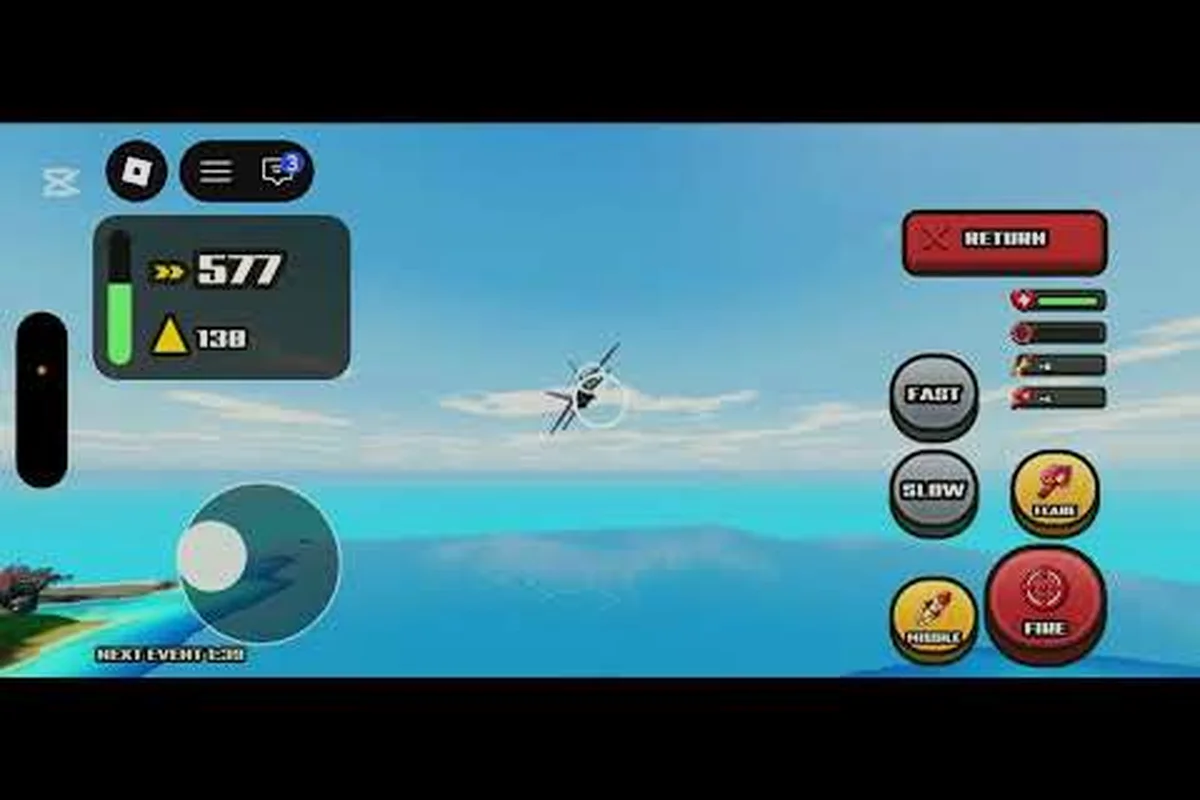
World of Nukes hands you three separate offensive systems — missile launchers, flyable jets, and commandable warships — and each one punishes sloppy timing in its own way. This weapons guide breaks down how every platform actually lands a strike, so you stop wasting expensive ordnance on targets that were never worth the reload.
The reason this matters is simple: the game's official Roblox page lists missiles, jets, and warships as core offensive systems, which means your strike output depends on understanding all three rather than mastering one. Players who only spam missiles from a fixed launcher get out-traded by anyone running combined air and naval pressure. Below, you'll find the launch flow for each platform, a comparison of which system earns its cost first, and the practical habits that separate clean strikes from wasted reloads.
How the World of Nukes Weapons Guide Fits Together
Every offensive action in the game traces back to one of three delivery platforms, and each has a distinct control loop. Missiles are the ranged backbone: you place a launcher, pick a target, and fire, then wait out travel time before damage lands. Jets are the mobile option, flown manually for air strikes. Warships sit offshore and are commanded rather than piloted, giving you naval strike reach without leaving your base.
The official game page describes these as the core offensive systems, and community gameplay footage confirms the practical split: missiles for reliable ranged damage, jets for pressure and repositioning, warships for sustained naval bombardment. None of them is strictly "best" — the strongest players rotate between them because each one covers a weakness the others expose.
Here is the practical overview before we go deep on each platform: the table below condenses the control loop, primary strength, and main weakness of the missile launcher, jet, and warship into a single reference you can return to mid-match. Read it as a decision aid rather than a ranking — when your missile launcher is locked in a reload cycle, the jet's manual flight control is what lets you keep pressure on, and when anti-air fire makes jets too risky, the warship's offshore bombardment becomes the safer sustained option.
| Platform | Control Style | Primary Strength | Main Weakness |
|---|---|---|---|
| Missile launcher | Place, target, fire | Reliable ranged damage | Travel time and reload windows |
| Jet | Manually flown | Mobility and air strikes | Exposed to anti-air while flying |
| Warship | Commanded from offshore | Sustained naval strikes | Slow to reposition |
A few habits apply across all three systems and are worth locking in early: treat the reload cycle as your real resource, since a missile launcher that fires without a confirmed target burns its cooldown for zero damage while the jet and warship sit idle; stagger launches so at least one platform stays armed when an enemy push arrives; and factor travel time into every missile shot, because damage resolves on impact rather than at the fire command. Keeping one platform in reserve — typically the warship, whose slow repositioning makes it a poor panic button — preserves a response when your primary strike option is down.
-
Always confirm the target before firing — a wasted missile is a wasted reload cycle, and reloads are the real bottleneck.
-
Stagger your launches so you are never fully reloading while an enemy pushes.
-
Watch travel time on missiles; damage lands after the projectile arrives, not at the moment you press fire.
-
Keep one platform in reserve so you always have a response ready.
The rest of this guide walks through each system in order of how quickly a new player can get value from it, starting with the missile launcher because its place-target-fire loop produces usable damage on your first match, then the jet, whose manual flight demands stick time before air strikes land reliably, and finally the warship, which pays off once you understand offshore positioning and bombardment timing. Treat that sequence as a learning path rather than a tier list: each section builds on the launch timing, targeting, and repositioning habits established in the one before it, so a player who masters missile reload discipline will find jet sorties and warship bombardment far easier to coordinate.
Missile Launcher Mechanics and Launch Flow
Missiles are the entry point for most players, and the loop is deliberately simple: place a launcher, select a target, fire, and wait. What catches people out is that travel time is a real variable — the projectile has to physically arrive, so damage-on-impact happens later than the button press. Community footage from creators like the Zainrail weapons series shows players tracking range and impact timing rather than treating missiles as instant hits.
Because official damage numbers are not published, the practical data points players track are range, travel time, and damage on impact. Treat any specific figure you see online as community-measured rather than developer-confirmed, and verify it against your own tests in a private server before you build a strategy around it.
The launch sequence step by step
-
Place your launcher on solid ground with a clear line toward the target area.
-
Select the target — confirm you are aiming at the structure or unit you actually want gone.
-
Fire and immediately note the travel time so you know when damage resolves.
-
Reposition or reload while the missile is in flight rather than standing still.
-
Log what the strike actually destroyed so you can judge whether the reload was worth it.
That fifth step is where most players leak value. If you never check the result, you never learn which targets justify a missile and which ones a jet could have handled for less cost. For a deeper breakdown of which warheads are worth the reload, the nuke launch and warhead breakdown covers the heavier end of the arsenal.
Choosing the Best Missiles for Your Playstyle
There is no single answer to which missile is best, because the right pick depends on whether you are hunting structures, pressuring moving targets, or defending. What you can do is match the missile to the job instead of defaulting to whatever you unlocked last.
| Job | Missile Priority | Why It Fits |
|---|---|---|
| Breaking static structures | High damage on impact | One clean hit removes the target |
| Pressuring mobile players | Short travel time | Less time to react or relocate |
| Area denial | Wide coverage | Forces enemies out of a zone |
| Defensive response | Fast reload | Lets you answer repeated pushes |
The pattern most players settle into is keeping two missile types ready: one heavy option for structures and one faster option for reacting to players. That way you are never caught holding only the slow, expensive round when a fast target appears.
Two more habits sharpen missile play considerably. First, fire from a position you can abandon — a launcher that never moves becomes a target marker for anyone watching. Second, treat every launch as a trade: if the missile costs more reload time than the damage it deals is worth, you have lost the exchange even if the hit lands. Players who internalize that trade-off stop firing at low-value targets entirely, and their effective strike rate climbs without any change in mechanics.
Jet Guide: How to Fly and Strike From the Air
Jets change the game because they are the only platform you actually pilot. Instead of placing a launcher and waiting, you take control, fly to the target, and deliver the strike yourself. That mobility is the entire point — a jet can hit a position that missiles cannot reach cleanly and can reposition faster than any ground system.
The trade-off is exposure. While you are flying, you are visible and vulnerable to anti-air, so the skill ceiling is about approach angles and exit routes rather than raw damage. Community gameplay shows the difference clearly: pilots who line up a run and leave immediately survive far more often than pilots who circle the target looking for a perfect angle.
Flight habits that keep you alive
-
Plan the exit before the approach — know where you are flying after the strike, not just toward it.
-
Come in low and fast rather than high and slow; altitude without speed just makes you an easier target.
-
Strike once, then leave — lingering over a target is how jets get shot down.
-
Use jets to pressure, not to finish — air strikes are strongest when they force a reaction.
Coordinating missiles and jets is where the real pressure comes from, since a missile launch forces a reaction while a jet run punishes the response. The air strike and naval strike coordination breakdown goes deeper into timing those two together.
For the most current weapon stats and mechanics, refer to the official World of Nukes Roblox page.
Warship Guide: Commanding Naval Strikes
Warships are the third leg of the arsenal and the one most players underuse. You do not pilot a warship the way you fly a jet — you command it, issuing orders and letting it deliver naval strikes from offshore. That makes it the slowest system to bring to bear but also the most persistent, because a positioned warship keeps threatening the coastline long after a missile has been spent.
The core limitation is repositioning. A warship that is out of position cannot quickly fix that, so the decision that matters most is where you park it early. Players who treat naval placement as a one-time decision tend to get far more value than those who move the ship reactively.
| Consideration | Practical Guidance |
|---|---|
| Placement | Position before you need the strike, not during |
| Target type | Coastal structures and exposed positions |
| Weakness | Slow to reposition once committed |
| Best pairing | Missiles to soften, warship to sustain pressure |
The full command flow — orders, targeting, and how naval strikes resolve — is covered in the warship command walkthrough, which is worth reading before you commit your first ship to a coastline.
Which Weapons System to Unlock First
For a new player, the unlock order matters more than any individual stat. The fastest path to real strike output is missiles first, jets second, warships third — because missiles give you reliable ranged damage with the least setup, jets add mobility once you understand targeting, and warships reward players who already know where the fight is happening.
| Priority | System | Reason to Unlock | When to Skip Ahead |
|---|---|---|---|
| 1 | Missiles | Immediate ranged damage, simple loop | Never — this is the foundation |
| 2 | Jets | Mobility and air strike pressure | If you already understand targeting |
| 3 | Warships | Sustained naval bombardment | Once you know the map's coastlines |
Beyond the unlock order, the compounding habit is upgrading one system at a time rather than spreading investment thin. A fully upgraded missile setup outproduces three mediocre platforms every time. The weapons upgrade and strike guide maps out which upgrades return the most strike value per resource.
Once all three systems are online, the winning pattern is rotation: open with a missile to force a reaction, follow with a jet run while the enemy is repositioning, and let a pre-placed warship keep pressure on anything that retreats toward the coast. That sequence works because each platform covers the reload gap of the last, and it is the single biggest jump in effectiveness available to a mid-game player.
Frequently Asked Questions
What is the best missile in World of Nukes?
There is no universally best missile, since official damage numbers are not published. Community testing suggests keeping one high-damage option for structures and one short-travel-time option for mobile targets, so you can match the round to the job instead of defaulting to a single type.
How do I launch missiles in World of Nukes?
Place a launcher, select your target, then fire and wait out the travel time before damage lands. The key habit is confirming the target first, because a wasted missile costs you a full reload cycle and leaves you unable to respond to a push.
How do I fly jets in World of Nukes?
You take manual control of the jet, fly to the target, and deliver the strike yourself. Plan your exit route before you begin the approach, come in low and fast, and leave immediately after the strike rather than circling, since lingering over a target is how pilots get shot down.
Are warships better than jets in World of Nukes?
They serve different roles rather than competing. Jets offer mobility and fast air strikes but are exposed while flying, while warships deliver sustained naval strikes from offshore but reposition slowly. Most strong players run both, using jets for pressure and warships for persistent coastal bombardment.
Which weapons system should a new player unlock first?
Start with missiles, since they deliver reliable ranged damage with the simplest setup and teach you targeting fundamentals. Add jets once you understand how travel time and targeting work, then bring in warships when you know the map's coastlines well enough to place a ship where it will matter.