
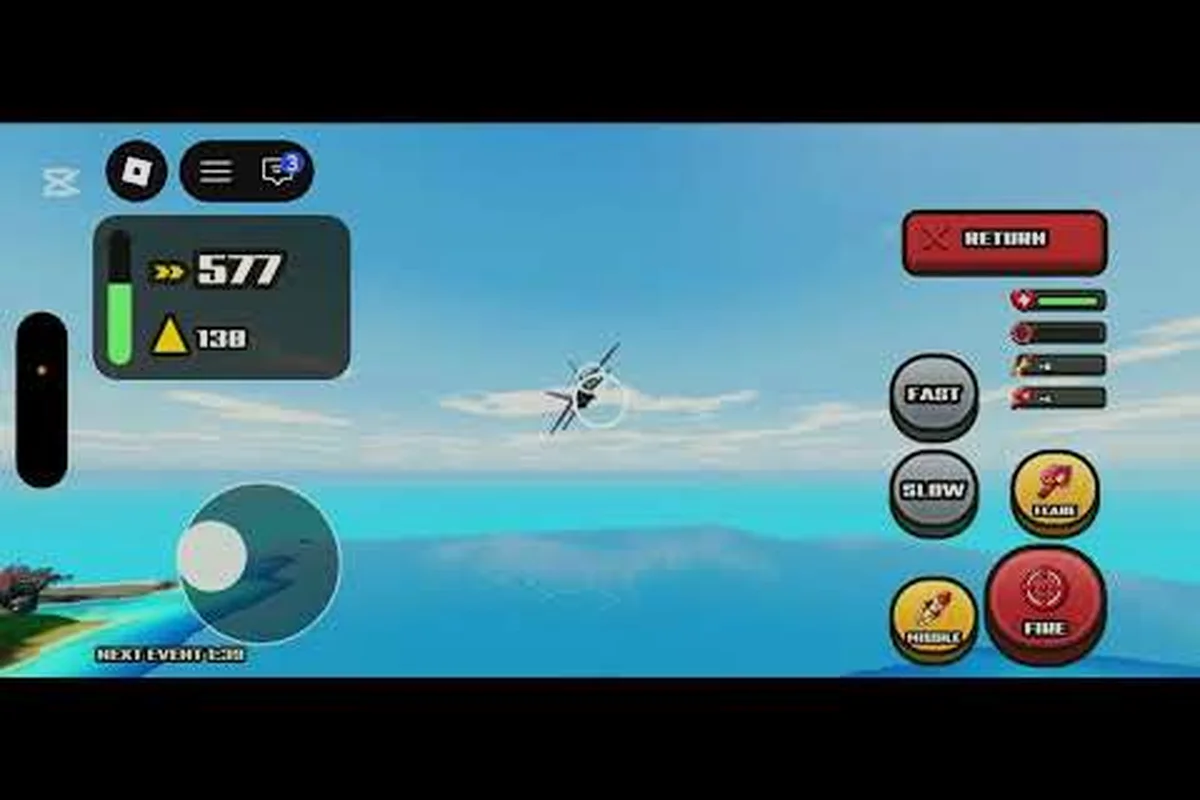
A good World of Nukes strike guide starts with one hard truth: the weapon you pick matters less than the target you point it at. Missiles, jets, and warships each solve a different problem, and mixing them up wastes warheads you cannot easily replace. This breakdown shows you which tool hits which target, what to upgrade first, and how to chain a full attack run so nothing gets through.
What the World of Nukes Strike System Actually Offers
The official World of Nukes game page lists three core offensive systems: missiles you launch from your island, jets you fly for air strikes, and warships you command for naval strikes. Each one has its own unlock path, its own cost curve, and its own failure mode. Understanding that split is the foundation of every good strike plan.
Missiles are your bread and butter. They are cheap relative to the other two, they launch fast, and they punish players who leave a gap in their anti-air screen. Jets hit harder but demand that you actually fly them, which means a bad pilot wastes more cash than a bad missile launch ever will. Warships sit in between: slower to position, but they bring sustained pressure that neither of the other two can match over a long fight.
The key insight from community gameplay is that coordination beats raw power. A single missile into a defended island often gets intercepted. A missile timed to arrive while a jet pulls anti-air fire in a different direction usually lands. That is the whole game in one sentence.
| Weapon System | Unlock Cost | Best Against | Weakness |
|---|---|---|---|
| Missiles | Low | Undefended income clusters | Intercepted by anti-air |
| Jets | Medium | Shielded targets, precision hits | Requires manual flying |
| Warships | High | Sustained pressure, coastal bases | Slow to reposition |
Before you spend anything, run through the full weapons guide so you know what each unlock actually gives you rather than guessing from the icon. The unlock order matters more than the individual price tag: buying a warship before you have a jet leaves you with no fast-response option when a shielded target appears, and skipping the cheap missile tier to save for jets usually means you cannot punish undefended income clusters in the early game. Read the cost curve against the table above, then match your first purchase to the targets you actually expect to face.
Reading the Complete World of Nukes Weapons List
The World of Nukes weapons list is short but each entry has real trade-offs, and the World of Nukes all weapons picture only makes sense once you understand what role each one fills. New players tend to grab whatever unlocks first and then wonder why their strikes bounce off a defended shoreline.
Here is how the arsenal breaks down by role, and the progression is deliberately linear: Viper missiles open the game as your cheap spam option, Standard missiles carry the mid-game with heavier damage offset by a longer reload, and Jets unlock the ability to punch through a shield wall that blocks everything else. Warships then extend that pressure along a coastline for minutes at a time, while Nukes sit at the top of the tree behind the wonder chain — powerful enough to end a base outright, but never worth firing blind.
-
Viper missiles — your entry-level strike option, cheap enough to spam early and accurate enough to punish a careless neighbor.
-
Standard missiles — the mid-tier workhorse, better damage but a longer reload that forces you to plan launches.
-
Jets — fast, precise, and the only reliable way to reach targets behind a shield wall.
-
Warships — floating launch platforms that keep pressure on a coastal base for minutes at a time.
-
Nukes — the endgame payoff, gated behind the wonder chain and never worth firing blind.
Matching Each Weapon to a Target
The mistake almost every intermediate player makes is treating the arsenal as a ladder where the newest unlock replaces the old one. It does not work that way. A Viper missile fired at an undefended income building is more efficient than a jet strike on the same target, because the jet costs more to replace and takes longer to rearm.
Use this simple rule: cheap weapons for cheap targets, expensive weapons for targets that actually threaten you. If a building will regenerate its value in two minutes, do not spend a jet on it. Save the jet for the shield generator or the anti-air battery that keeps your missiles from landing.
| Target Type | Recommended Weapon | Why |
|---|---|---|
| Undefended income buildings | Viper missile | Lowest cost per point of damage |
| Anti-air batteries | Jet | Reaches behind the screen missiles cannot cross |
| Shield generators | Jet or warship | Sustained damage breaks coverage faster |
| Coastal defense clusters | Warship | Out-ranges shore guns |
| Enemy launch sites | Missile volley | Fast enough to beat a repair cycle |
Why the Best Jet Is a Timing Tool, Not a Damage Tool
Players searching for the World of Nukes best jet usually expect a damage ranking, but the honest answer is that the best jet is the one you can actually fly without crashing into terrain. Community reports consistently show that pilot skill matters more than the airframe, because a jet that misses its run delivers zero damage regardless of its stat line.
The practical takeaway is to practice on an empty stretch of ocean before you commit a jet to a real strike. Learn the turn radius, learn how far out you need to start your dive, and learn how much time you have between the anti-air warning and the actual hit. Once those three things are muscle memory, the jet becomes the most reliable precision tool in your kit.
Building a World of Nukes Weapons Upgrades Path
Weapons upgrades are where most players either accelerate hard or stall out completely. The World of Nukes weapons upgrades system rewards sequencing: spend on the wrong tier and you end up with a slightly better version of a weapon you barely use. Spend on the right tier and every strike you make gets more efficient.
The upgrade priority that community testing keeps landing on looks like this: missile reload speed is the single highest-leverage purchase in the entire World of Nukes weapons upgrades tree, because cutting reload time raises your launches per minute and multiplies the output of every missile you already own — a 20% reload cut effectively buys you a fifth more strike volume before you spend a single credit on damage. Missile damage only pays off after that foundation is set, since a hard-hitting warhead on a slow rack still loses the DPS race to a fast rack firing weaker shots.
-
Missile reload speed first — more launches per minute compounds across every fight.
-
Missile damage second — once you can fire often, make each shot count.
-
Jet durability third — a jet that survives one extra anti-air hit pays for itself fast.
-
Warship range fourth — only matters once you are actually contesting coastlines.
-
Nuke yield last — expensive, situational, and useless if you cannot reach the launch stage.
The Cost Curve Nobody Warns You About
Upgrade costs do not scale linearly. The jump from tier two to tier three on missiles is roughly double the jump from tier one to tier two, and the jump to tier four is steeper again. That means your first two missile upgrades are almost always worth it, while the fourth one competes directly against unlocking a whole new weapon system.
Run the numbers before you commit. If a missile upgrade costs more than a jet unlock and only adds a small damage bump, the jet is usually the better buy because it opens a target type you could not touch before. The missile upgrades breakdown walks through the exact thresholds where one path overtakes the other.
| Upgrade Tier | Relative Cost | Payoff Timing | Verdict |
|---|---|---|---|
| Missile reload I | Low | Immediate | Always buy |
| Missile damage I | Low | Immediate | Always buy |
| Jet durability I | Medium | Within a few strikes | Strong buy |
| Missile reload II | Medium | Immediate | Buy if you strike often |
| Warship range I | High | Slow | Situational |
| Missile damage III | Very high | Slow | Skip until late game |
Choosing a Warship That Fits Your Strike Plan
The World of Nukes best warship question depends entirely on whether you play aggressively or defensively, because warships are the only weapon system that rewards patience. A warship parked off an enemy coast applies pressure simply by existing, forcing that player to keep defenses pointed at the water instead of at the sky.
Aggressive players want the faster hull with shorter range, since they will be repositioning constantly and a slow ship just gets caught out of position. Defensive players want the longer-range hull that can sit behind their own anti-air umbrella and lob shots at anything that approaches. Neither is wrong, but picking the fast hull and then playing passively wastes the one advantage it has.
Positioning Rules That Keep Warships Alive
A warship caught alone and unsupported dies quickly, and replacing one costs enough to set your whole economy back — a single lost hull can drain the resource stockpile you were saving for your next weapons upgrade, delaying your entire build order. Because warships are your slowest, most expensive naval unit, every engagement should be planned around survivability first and damage second. Follow these positioning habits:
-
Never park inside enemy anti-air range unless you are deliberately baiting a response.
-
Keep a friendly missile cover arc between your ship and the enemy shoreline.
-
Reposition after every two or three volleys so the enemy cannot pre-aim.
-
Retreat early rather than trading a warship for one building.
The attack strategy breakdown covers how to sequence warship pressure with a missile volley so the enemy has to choose which threat to answer — and that forced choice is where positioning pays off. If your warship sits inside the missile cover arc while the volley launches, the enemy's anti-air has to split between intercepting incoming missiles and tracking your hull, which usually means one threat slips through. Launch the volley first to draw the anti-air response, then push the warship forward only after the enemy's defensive cooldowns are spent; reversing that order exposes your most expensive naval unit to a full-strength anti-air screen with nothing to distract it. Time the push so your warship arrives just as the missile wave clears, and the enemy is left answering a threat they can no longer intercept.
Running a Coordinated Strike From Start to Finish
A coordinated strike is not complicated, but it does require order. Firing everything at once looks impressive and accomplishes very little, because the enemy's anti-air answers the first threat and then has time to reload before the second arrives.
The sequence that works follows that logic exactly, and the timing between steps matters as much as the order itself: scout the anti-air and shield coverage, open with the jet to pull the anti-air response, follow with missiles inside the same window while it is distracted, then bring the warship in last to punish survivors and keep pressure on the repair cycle before withdrawing to rearm. Each step exists to set up the next — a missile launched before the jet has drawn the anti-air answer simply feeds the first reload cycle you were trying to exploit.
-
Scout first. Confirm where the anti-air and shield coverage actually sit, not where you assume they sit.
-
Open with the jet. Pull the anti-air response toward the air threat.
-
Follow with missiles within the same window. While anti-air is distracted, missiles slip through.
-
Bring the warship in last. It punishes whatever survived and keeps pressure on the repair cycle.
-
Withdraw and rearm. Do not linger; a second wave launched too early arrives piecemeal.
Timing Windows and the Anti-Air Reload
The entire coordinated strike hinges on one number: how long the enemy's anti-air takes to reload. If your second threat arrives inside that window, it lands. If it arrives after, it gets intercepted and you have burned a warhead for nothing.
Community testing suggests the practical window is short enough that you should launch your missile volley the moment the jet begins its attack run, not after it finishes. Treat the jet as a distraction first and a damage dealer second. When the strike does land, the follow-up is usually a nuke launch on whatever the conventional weapons softened up.
Common Strike Mistakes That Waste Warheads
Most wasted warheads come from three habits, and all three are fixable. The first is firing blind: launching a nuke at an island you have not scouted, only to watch it die against a shield you never saw on the map. The second is misallocating your upgrade budget — dumping cash into nuke yield research before you have unlocked the launch stage, so the extra damage sits idle while your economy stalls. The third is treating a solo warhead as a siege tool against a defended island, when a layered defense of interceptors and shields will absorb a single missile almost every time. Each mistake traces back to acting before you have information, and each one shows up clearly in your warhead ledger once you start tracking where your launches actually land.
-
Firing without scouting. You launch at a target that turns out to be shielded, and the missile dies for nothing.
-
Upgrading the wrong tier. You pour cash into nuke yield before you can even reach the launch stage.
-
Solo strikes against defended islands. One weapon against a layered defense almost always loses.
The fix for all three is the same discipline: scout, sequence, and upgrade in the order your actual playstyle demands rather than the order the menu presents. Players who internalize that consistently out-damage players with better weapons but worse timing.
Frequently Asked Questions
What is the most important part of a World of Nukes strike guide?
Timing and target matching matter more than raw weapon stats. A cheap missile fired at the right moment through a distracted anti-air screen outperforms an expensive jet that arrives alone. Learn the anti-air reload window first, then build your arsenal around hitting inside it.
Which weapon should I upgrade first in World of Nukes?
Missile reload speed is the safest first upgrade because it compounds across every fight you take. Once you can fire more often, missile damage becomes worthwhile. Jet durability comes third, and warship range only matters once you are actively contesting coastlines.
Is the best jet worth unlocking early?
Only if you are willing to practice flying it. A jet delivers nothing when it misses, so the unlock is wasted on players who have not learned the turn radius and dive timing. Practice over open water first, then commit it to real strikes once the controls feel natural.
How do I stop my warships from dying immediately?
Keep them outside enemy anti-air range and inside your own missile cover arc, then reposition after every two or three volleys. Retreating early costs you nothing; losing a warship to one building trade sets your economy back several minutes of income.
Can I win fights with missiles alone?
Against undefended or lightly defended islands, yes. Against layered defenses, no, because anti-air will intercept a single-threat volley every time. Missiles work best as the second half of a coordinated strike, arriving while the enemy is still answering your jet.
The through-line for every World of Nukes strike is discipline over firepower: scout the defense, match the weapon to the target, upgrade in the order your playstyle actually uses, and sequence your threats so the enemy never gets a clean reload. Get those four habits right and even a modest arsenal starts landing hits that bigger, sloppier loadouts miss.